Bali Helicopter Tour Prices During Peak vs Off-Season
Bali helicopter tour prices during peak season are typically 15-30% higher than in the off-season, a direct result of surging demand for a limited supply of premium aircraft and certified pilots. This premium affects both short scenic flights and full-day private charters.
- Peak Season: July-August and late December-early January see the highest rates.
- Typical Cost: Expect a 30-minute scenic tour to range from $1,500 to $2,500 USD.
- Off-Season Savings: The same 30-minute flight can cost as little as $1,200 USD in months like February or November.
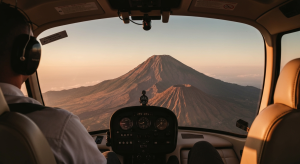
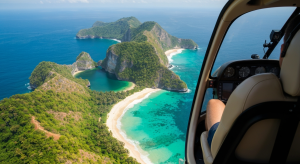
The air is thick with the scent of frangipani and clove-spiced kretek cigarettes as you step onto the tarmac. Ahead, the sleek lines of a Eurocopter EC130 gleam under the equatorial sun. The rhythmic whump-whump-whump of the main rotor blade begins to build, a percussive heartbeat that quickens your own. As the helicopter lifts, the world falls away, and the patchwork of emerald rice paddies and terracotta-roofed villages becomes a living map. This is Bali from the perspective few ever witness, an experience where the cost is as variable as the island’s own dynamic weather patterns. Understanding the seasonal ebb and flow of pricing is the first step for the discerning traveler in crafting the ultimate aerial journey over the Island of the Gods.
Decoding Bali’s Travel Seasons: More Than Just Sun and Rain
To grasp the fluctuations in helicopter tour pricing, one must first understand the nuanced calendar of Balinese tourism. The common simplification of a “wet” and “dry” season barely scratches the surface. The primary driver of cost is demand, which is dictated by international holiday schedules, not just local weather. Bali’s dry season officially runs from April through October, offering the most reliably clear skies and minimal rainfall. Within this period, however, lies the “peak of the peak”: July and August. This two-month window coincides with summer holidays in Europe, North America, and the Middle East, causing a massive influx of visitors. According to Indonesia’s Ministry of Tourism, pre-pandemic visitor arrivals during these months could be up to 35% higher than in shoulder months. A second, equally intense peak occurs from roughly December 20th to January 5th, driven by the Christmas and New Year holidays. It is during these two specific periods that the bali helicopter price reaches its annual zenith, with demand far outstripping the supply of available aircraft.
Conversely, the wet season, from November to March, is considered the low season. While daily downpours are common, they are often brief, intense, and predictable, usually occurring in the mid-afternoon. This leaves morning and early evening skies remarkably clear and the landscape exceptionally verdant. For this reason, many on-the-ground operators refer to it as the “green season.” The shoulder seasons—April to June and September to October—present what many Bali connoisseurs, myself included, consider the ideal window. You benefit from the clement weather of the dry season while avoiding the crowds and inflated prices of the July-August peak. During these months, the island breathes a little deeper, and so can your travel budget.
The Price Differential: A Deep Dive into Peak Season Helicopter Costs
During Bali’s peak season, the laws of supply and demand are on full display in the aviation sector. The island has a finite number of high-quality, tourism-certified helicopters—such as the Bell 429 and the aforementioned Eurocopter EC130—and an equally finite pool of experienced pilots qualified to fly them. When demand spikes in July, August, and late December, charter companies can, and do, implement significant surcharges. I spoke with a charter coordinator I’ve known for years, who confirmed that a standard 60-minute “Grand Volcano & Temple Tour” that might cost $3,800 in May could easily be priced at $4,800 or more for the same duration in August. That’s a premium of over 26%. The key factor is not just the flight itself, but the exclusivity of the time slot. During peak times, operators can book their aircraft back-to-back from sunrise to sunset, leaving no room for negotiation.
This price inflation is even more pronounced for private charters and bespoke itineraries. A half-day charter to the Gili Islands or a custom aerial photography mission over the Nusa Islands can see prices jump by as much as 40%. The reason is twofold: pilot time is at a premium, and logistical support, including landing permits and ground crew coordination, becomes more complex with congested airspace and facilities. Booking well in advance is paramount. For a flight during the Christmas week, I would advise securing your aircraft no later than September. Anything later and you risk not only exorbitant pricing but a complete lack of availability, especially for the preferred six-seater models. Understanding the complete list of comprehensive charter rates for Bali helicopters is essential for planning a trip during these high-demand periods.
Off-Season Advantages: Securing Value Without Sacrificing Experience
While the peak season offers guaranteed sunshine, the off-season, or “green season,” presents a compelling case for value and a different kind of beauty. The most obvious advantage is financial. That same 60-minute volcano tour priced at $4,800 in August could be secured for as low as $3,500 in February, representing a saving of nearly 30%. This discount allows travelers to either pocket the savings or, more enticingly, upgrade their experience—perhaps extending a 30-minute coastal flight to a 45-minute exploration of the island’s interior for the same budget. Beyond the price, the experience itself is altered. The island, refreshed by daily rains, is at its most vibrant. The rice paddies of Jatiluwih, a UNESCO World Heritage site, are a shocking, almost fluorescent green, and the island’s numerous waterfalls, like Sekumpul, are at their most voluminous and dramatic. From the air, this is a powerful spectacle.
The primary concern for off-season travelers is, of course, the weather. However, this fear is often overstated. Balinese rain showers are typically short-lived and geographically isolated. Reputable helicopter operators employ sophisticated weather tracking and have pilots with extensive local knowledge. They will not fly if conditions are unsafe. More often than not, a flight scheduled for 2 PM might be shifted to 4 PM to avoid a passing shower. In my experience, morning flights between 9 AM and 12 PM during the wet season have an over 90% success rate for clear conditions. Furthermore, the reduced demand means greater operational flexibility. Pilots may be more inclined to linger over a point of interest or adjust a flight path to capture a pod of dolphins, a luxury not always possible during the rigidly scheduled peak season.
The Shoulder Season Sweet Spot: An Editor’s Choice for Bali Flights
For the traveler who seeks the optimal balance of perfect weather, competitive pricing, and manageable crowds, the shoulder seasons are unequivocally the time to book a helicopter tour over Bali. These periods, spanning from April to June and again from September to October, offer the best of all worlds. You are flying within the dry season, meaning the likelihood of pristine, clear days is exceptionally high. Yet, you sidestep the massive influx of tourists that characterizes July and August. The result is a more serene experience, both in the air and on the ground. From a pricing perspective, the shoulder season is the sweet spot. You will find that costs are only marginally higher, perhaps 5-10%, than the lowest off-season rates. This represents a substantial value proposition when compared to the 25-30% premium demanded during the high season.
Booking a flight during these months also aligns with some of Bali’s most fascinating cultural events, which are a spectacle from above. The major holidays of Galungan and Kuningan, which celebrate the victory of good over evil, often fall within these periods. Seeing the island decorated with towering *penjor*—ornate bamboo poles—lining every road is a unique sight. Furthermore, the slightly lower demand means better availability for last-minute decisions. While I would still recommend booking a few weeks in advance, it is far more feasible to arrange a flight with only a few days’ notice in May than it would be in August. This flexibility is a luxury in itself. For those planning a trip, I highly recommend you explore the different Bali helicopter tour costs available throughout the year to see the clear financial advantage of these remarkable months.
Beyond the Base Price: Ancillary Costs and Seasonal Surcharges
The quoted price for a helicopter tour is often just the starting point. Several ancillary costs and surcharges, many of which are more pronounced during peak season, can affect the final bill. Landing fees are a primary example. While tours typically operate from a dedicated heliport near Ngurah Rai International Airport (DPS), custom charters that involve landing at a private villa, a luxury resort, or another island like Nusa Lembongan will incur additional fees. These fees, set by the property owners, can range from $250 to over $700 and are often higher during peak tourist months. Another critical factor is the holiday surcharge. Flying on Christmas Day, New Year’s Eve, or Nyepi (the Balinese Day of Silence, though flights are grounded for 24 hours) will almost certainly come with a fixed premium, often an additional 10-20% on the flight cost.
Furthermore, the nature of your itinerary plays a role. Standard scenic tours follow a pre-approved flight path. Any deviation—such as a request to circle a specific clifftop villa for photography or to hover over a surf break for an extended period—is considered a custom flight and will be priced accordingly. During the peak season, when aircraft time is meticulously scheduled, these custom requests come at a much higher premium. Finally, consider the complete package. Many operators offer all-inclusive experiences that bundle the flight with luxury ground transportation and champagne. The cost of these add-ons also inflates during peak season, as high-end car services and suppliers are also in greater demand. It’s crucial to request a fully itemized quote to understand every component of the cost before confirming your booking.
Quick FAQ: Your Seasonal Pricing Questions Answered
How far in advance should I book for a peak season helicopter flight in Bali?
For travel during July, August, or the Christmas/New Year period, I strongly recommend booking a minimum of three to six months in advance. The best aircraft and time slots, particularly for sunset flights, are often reserved half a year out. For a shoulder season flight, four to six weeks is generally sufficient.
Is weather a major risk for off-season helicopter tours?
While the wet season (November-March) sees more rain, it is not a prohibitive risk. Operators use advanced meteorological data and will not fly in unsafe conditions. Cancellations are rare; more commonly, a flight may be delayed by an hour or two to wait for a shower to pass. Booking a flight for the morning offers the highest probability of clear skies.
Do prices differ for different types of helicopters?
Absolutely. A larger, more luxurious six-passenger Eurocopter EC130 or Bell 429 will always be more expensive than a smaller four-passenger Robinson R66. This price gap widens during peak season, as the larger, more comfortable aircraft are in the highest demand for families and small groups. The price difference can be as much as 40-50%.
Can I find last-minute deals on Bali helicopter tours?
During the off-season, yes. If an operator has an empty slot for the following day, they may offer a discount of 10-15% to fill it. However, this is never a guarantee. During peak and shoulder seasons, the concept of a “last-minute deal” is virtually nonexistent; you are more likely to face a “last-minute premium” if a slot is even available.
Ultimately, timing is the most significant factor influencing the cost of your aerial Bali adventure. By strategically planning your flight around the island’s distinct tourism seasons, you can unlock substantial value or ensure availability for a rare experience. The choice between the vibrant energy of the peak season and the lush, tranquil beauty of the green season is a personal one, but an informed one. For a detailed and up-to-date breakdown of flight options, aircraft, and seasonal promotions, I encourage you to view the complete bali helicopter price list on our main page to begin crafting your perfect journey.