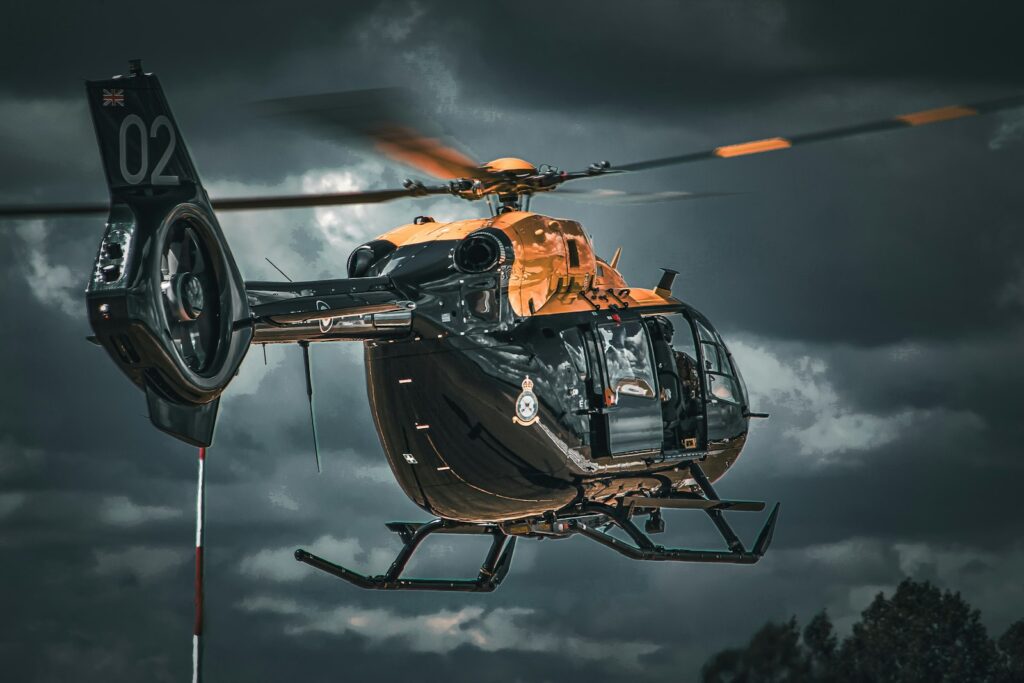
Helicopter tours in Bali are safe when operated by a licensed, AOC-holding company flying a properly registered aircraft under Indonesian DGCA oversight. That sentence matters because the answer is not a blanket yes for every vendor advertising a scenic flight online. Indonesia’s aviation regulator, the Direktorat Jenderal Perhubungan Udara (DGCA), enforces CASR Part 91 for general flight rules and requires any operator carrying paying passengers on demand to hold an Air Operator Certificate under Part 135 (AOC 135). The distinction between a properly certificated charter company and a hobbyist with a helicopter and a WhatsApp number is real, and it is entirely checkable before you hand over a deposit.
This page is a plain-language explainer of Indonesian rotorcraft regulations, what to verify before booking, and where the genuine risk factors actually sit — weather, weight-and-balance, and helipad approval — rather than the theatrical fears that tend to dominate travel forums.
The Regulatory Framework: CASR, DGCA, and AOC 135
Indonesia mirrors the structure of FAA and ICAO rules, adapted under the Civil Aviation Safety Regulations (CASR). Three parts are directly relevant to any helicopter flight you take as a tourist:
- CASR Part 91
- General operating and flight rules. Covers VFR and IFR weather minima, altimetry, airspace, crew rest, and pre-flight obligations. Every helicopter operating in Indonesian airspace — training, private, or commercial — operates under Part 91 as the baseline.
- CASR Part 135
- On-demand air transport. Any helicopter company selling seats or charters to the public must hold an Air Operator Certificate (AOC) issued under Part 135. This certificate requires the operator to document maintenance programs, crew training syllabi, operations manuals, and minimum equipment lists — and to pass a DGCA inspection before the certificate is issued and at renewal. Holding an AOC does not mean every flight is perfect; it means the organization behind it has been vetted at a systemic level.
- PM 94/2015
- Ministry of Transportation regulation governing heliport and helipad construction and operation. Any departure point used for commercial flights — a purpose-built heliport, a hotel rooftop pad, a resort pad on a clifftop — should hold the necessary approvals under this regulation. The DGCA has been updating its oversight of Bali heliports, partly because of proximity conflicts with the Ngurah Rai (DPS) control zone and kite-flying activity near approach corridors. New rules for Bali specifically have been publicly signalled by the Tourism Ministry; treat the heliport approval status of any departure point as something to verify at the time you book, not to assume.
What to Look for on Any Bali Helicopter Operator
The operators you find via legitimate booking channels — Balicopter, Fly Bali/flybali.id, and the helipad operations based at luxury properties around Jimbaran, Ungasan, and South Bali — generally hold their AOC paperwork and publish their fleet details. But the Bali tourism market also attracts gray-area operators, particularly for photo shoots and bespoke charters, so the same verification steps apply regardless of brand recognition.
Aircraft Registration: The PK- Prefix
Every Indonesian-registered aircraft carries a registration mark beginning with PK-. Ask your operator for the specific registration of the aircraft you will fly on. You can cross-check PK-registrations against the DGCA’s aircraft registry. If a company cannot tell you the registration of the helicopter you are boarding, that is a red flag, not a minor administrative detail. In Bali the confirmed fleet includes types such as the Bell 505 Jet Ranger X, Robinson R66, and Airbus H125 (AS350 Écureuil) — each with its own maintenance cycle, weight limits, and passenger capacity. Knowing the registration lets you confirm the type, the operator on record, and whether the airworthiness certificate is current.
AOC 135 Certificate: Ask for the Number
Reputable Bali charter operators cite their AOC 135 status in marketing materials. Urban Air Helicopters, for instance, references this certificate directly. If you are booking a bespoke charter — a doors-off photography flight, an island-hopping itinerary, a proposal setup — ask the operator to confirm AOC 135 and provide the certificate number. A legitimate AOC holder will not hesitate. This single document tells you more about operational safety than any TripAdvisor star rating.
Crew Licensing: CASR Part 61 and Rotorcraft Endorsements
Indonesian commercial pilots hold licences under CASR Part 61. A pilot flying you on a tourist scenic flight must hold at minimum a Commercial Pilot Licence (CPL) with rotorcraft category and the relevant type rating for the helicopter in service. Foreign pilots operating in Indonesia need their licence validated by DGCA. Asking to see a pilot’s licence is unusual and somewhat theatrical in practice; what you can reasonably do is ask the operator how many total flight hours their captains hold and whether any international type-rating training is involved. The good operators in Bali are proud to talk about this. The ones who give vague answers or treat the question as an intrusion deserve that reaction as a data point.
Bali Helicopter Safety Record
Indonesia’s aviation safety record has historically attracted scrutiny — the country’s fixed-wing accident rate drew international attention in the 2000s and early 2010s — but the rotorcraft charter sector serving Bali tourism operates in a meaningfully different environment. Helicopter tours depart under Visual Flight Rules (VFR), meaning a pilot must maintain prescribed minimum visibility and cloud clearance. When those conditions cannot be met, the flight does not happen. That go/no-go culture, applied consistently, is the single most important safety mechanism in tourist helicopter operations anywhere in the world.
The KNKT (Indonesia’s National Transportation Safety Committee) does investigate rotorcraft incidents and publishes preliminary and final reports; the 2022 preliminary report on PK-VPJ, a Robinson R66 involved in a Bali area occurrence, is an example of that oversight functioning as designed. No safety record in any country is incident-free over a long enough horizon. What matters to a traveller is whether the system is functioning: trained crew, maintained aircraft, AOC oversight, honest weather decisions. Based on publicly available information, the certificated Bali charter operators meet that standard. The due diligence below helps you confirm it for the specific company you are booking.
Weather, VFR Minima, and Go/No-Go Decisions
More scenic flights in Bali are cancelled for weather than for any mechanical reason. Understanding why — and what a cancellation policy should look like — is as practical as any certificate check.
Wet Season vs. Dry Season
Bali’s wet season runs roughly November through March. This does not mean flights stop entirely; it means same-day cancellations are meaningfully more frequent. Afternoon thunderstorm cells can develop quickly over the volcanic interior. The mountain routes — Mount Batur, Kintamani, Mount Agung — are especially sensitive to cloud base. The Nusa Penida channel routes involve overwater flying where conditions can shift between the South Bali coast and the islands. The dry season (approximately April through October) offers significantly more reliable flying days, better light, and fewer rebooking headaches.
Time of Day
Early morning flights — departures around 07:00–09:00 — consistently give the smoothest air, clearest visibility, and best photography light. Sea breeze turbulence builds through mid-morning on coastal cliff routes. Afternoon thermals over the volcanic terrain intensify after noon. The romantic appeal of a sunset flight is real, but so is the fact that cumulus buildups peak in the late afternoon during the shoulder season. Most Bali operators run their windows from around 09:00 to 16:30; if a company offers departures outside that band without a compelling operational reason, ask why.
What a Sound Cancellation Policy Looks Like
A reputable operator makes the go/no-go call on the morning of the flight, not the night before, because Bali’s weather can change overnight in either direction. If they cancel, your options should include: a full cash refund, a reschedule to any available date within a reasonable window (30–60 days is standard), or a credit. Be wary of any operator whose cancellation terms place weather risk entirely on you — charging a cancellation fee when they are the ones calling off the flight due to conditions is a sign of a company that prioritizes revenue over passenger experience and transparency.
Over-Water Flying: Life Jackets and Safety Briefings
A significant portion of Bali helicopter routes cross open water: the Nusa Penida channel, the Lombok Strait approaches, the reef passages around Nusa Lembongan. Indonesian CASR regulations, consistent with ICAO Annex 6 standards, require that life jackets be carried on board for over-water flights beyond a certain distance from shore. The practical application in Bali tourism is that any flight routing over open ocean passages should include a pre-flight briefing on life jacket location and donning, emergency egress from the cabin, and the pilot’s communication procedures in case of an unplanned landing.
Pre-flight safety briefings are not optional courtesies. They are a regulatory requirement. If your boarding experience consists entirely of a photo-op and immediately climbing in, something is being skipped. A proper briefing covers: emergency exits, door operation (particularly important on doors-off flights), seat belt and harness systems, prohibited items, headset/intercom use, and the pilot’s authority over all operational decisions. The whole briefing takes three to five minutes. If yours was shorter than that, ask questions before the rotors spin up.
Weight, Balance, and Passenger Declarations
Weight-and-balance is not a bureaucratic inconvenience — it is the most direct safety calculation that occurs on every helicopter flight. An overloaded or improperly balanced helicopter has degraded performance margins, reduced autorotation capability, and altered handling characteristics. The passenger weight declaration you are asked to provide at booking is used by the pilot to plan the load sheet and, on short sectors with high density altitude (Bali’s coastal heat and humidity raise the effective altitude), to determine whether fuel needs to be reduced to stay within MTOW.
Operators in Bali publish varying stated limits. Fly Bali’s Nusa Penida transfer explicitly enforces a 350 kg total payload ceiling (passengers plus luggage). BaliLook’s helicopter taxi service states a 320 kg maximum per charter. These are not marketing footnotes; they reflect the actual weight-and-balance envelope of the aircraft on the route. If your declared weight does not match check-in reality, a professional operator will adjust: reducing one passenger, redistributing seating positions for balance, or trimming the fuel load. If an operator waves through a group that visibly exceeds the stated limits without any calculation, that is worth taking seriously as an operational safety question.
Declare your honest weight. It protects everyone on the flight, including you.
Operator Vetting Checklist
Before you confirm any booking, work through this list. A credible operator handles all of these without friction:
| Check | What to Ask or Verify | Good Sign | Warning Sign |
|---|---|---|---|
| AOC 135 | Does the company hold a valid Air Operator Certificate under CASR Part 135? | Provides certificate number; references DGCA oversight | Vague about certification; says “we follow international standards” without specifics |
| PK- Registration | What is the registration of the aircraft I will fly on? | Gives a PK-XXXX mark immediately | Cannot or will not confirm the specific aircraft |
| Booking confirmation match | Does the aircraft registration on any confirmation document match what you are told? | Consistent documentation | Different aircraft swapped without notice |
| Insurance | Is third-party passenger liability insurance in place? | Confirms coverage on request; certificate available | Deflects or says “you don’t need to worry about that” |
| Weather/refund policy | What happens if the flight is cancelled for weather? | Clear written policy: full refund or free rebook | Weather cancellation fee; credits that expire in days; no written policy |
| Helipad approval | Is the departure helipad/heliport approved under PM 94/2015? | Can name the heliport and confirm DGCA status | Departure from an ad-hoc field or unmarked pad with no documentation |
| Pre-flight briefing | Will there be a safety briefing covering exits, life jackets, and emergency procedures? | Confirmed; briefing card or verbal brief conducted before departure | Boarding proceeds with no briefing |
| Pilot hours | How many total rotorcraft hours does the captain hold? | Willingness to share; evidence of type rating on the specific aircraft | Evasive; no information offered |
Not every operator will welcome every question with equal warmth, and some of these verifications require persistence. That is useful data. Companies that have nothing to hide find these questions routine.
Doors-Off Flights: Additional Safety Considerations
Doors-off photography charters involve a distinct set of rules layered on top of the standard charter framework. When a helicopter flies without doors, every person aboard must be secured with an appropriate harness, loose items must be stowed or tethered, and clothing must be chosen to avoid anything that can be drawn into the rotor or tail rotor airstream. Operators offering doors-off flights in Bali — typically 60–120 minute aerial photography or content sessions — should provide harness briefings, specify exactly what camera equipment can be brought and how it must be secured, and confirm that the aircraft and route are approved for this configuration under their AOC operations manual.
Do not assume that a company willing to book a doors-off flight has necessarily done the safety work behind it. Ask for the specific procedures before you arrive. A good doors-off operator will have a written briefing document; a marginal one will figure it out when you land at the helipad.
A Note on Evolving Regulations
Indonesia’s DGCA has been actively updating its oversight posture for Bali helicopter operations. Public statements from the Tourism Ministry have addressed tourist safety requirements and coordination with Ngurah Rai airspace controllers — particularly regarding the corridor conflicts created by kite-flying near DPS approach paths. Specific new requirements may affect approved departure points, minimum distance from the DPS control zone, and safety equipment mandates. This page reflects the regulatory structure as understood at the time of writing; always verify the current status of your operator’s approvals and any new DGCA requirements at the time of your booking. Regulations in this sector are evolving quickly, and a company that held full approvals last year should be confirming current standing this year.
Ready to plan a flight with a vetted operator? Plan your trip with our concierge — we can connect you with AOC-holding operators, help you match the right aircraft and route to your group size, and flag any current regulatory developments. WhatsApp planning is available for quick questions or same-week booking assistance.
Frequently Asked Questions
Are helicopter tours in Bali safe for families with young children?
Children can fly on Bali helicopter tours; most operators set a minimum age of 2–3 years and require children to occupy their own seat with a fitted harness rather than a lap-hold. Infants under that threshold are generally not permitted due to harness compatibility. The aircraft cabin vibration and noise level (headsets provided) are the main practical concerns rather than any inherent danger, provided the operator holds proper AOC 135 certification and the flight departs under legal VFR conditions. Confirm the operator’s child policy at booking — some flights that are sold as shared-seat scenic tours may require an adult-to-child ratio or have age restrictions based on the specific aircraft configuration.
How do I verify that a Bali helicopter operator holds a valid DGCA AOC 135?
The most direct method is to ask the operator in writing for their AOC number and the name of the certificate holder as registered with DGCA. You can then contact the DGCA’s Directorate of Airworthiness and Aircraft Operations (DKPPU) to confirm. In practice, most travellers rely on the operator providing the certificate number and cross-referencing any available DGCA public registry. Operators listed on established OTA platforms such as Viator or Klook have nominally gone through a supplier screening process, though that does not replace your own verification. A company that cannot provide an AOC number on request should not receive your booking.
What happens if my Bali helicopter flight is cancelled due to bad weather?
Reputable AOC-holding operators issue a same-morning go/no-go decision based on actual conditions at the heliport and along the route. If they cancel, standard industry practice in Bali is a full refund to your original payment method or a complimentary rebook on any available date within 30–60 days, at no change fee. Some operators offer a credit that can be applied to a different route or upgraded experience. Whatever the policy, get it in writing before you pay the deposit — a screenshot of the booking confirmation that spells out the weather-cancellation terms is sufficient. If the operator’s terms place the financial burden of a weather cancellation on the passenger, that is a commercial policy worth knowing upfront, and it reflects poorly on the operator’s customer orientation regardless of their safety credentials.
Do Bali helicopter operators carry life jackets for over-water routes?
Yes, by regulation and standard practice. Indonesian CASR requirements, aligned with ICAO standards, mandate life jacket carriage on flights operating over water beyond gliding distance from shore. The Nusa Penida and Nusa Lembongan routes, and any flight crossing the Lombok Strait, fall into this category. Your pre-flight briefing should include the location of the life jacket under or beside your seat, how to don and inflate it, and what the pilot’s emergency procedures are in the event of an unplanned water landing. If the briefing does not cover this on an over-water route, ask specifically before departure.
Is my existing travel insurance enough to cover a helicopter tour in Bali, or do I need extra cover?
Standard travel insurance policies vary significantly in how they treat rotorcraft activity. Many policies cover helicopter rides as “air travel” without exclusion; others classify anything beyond a scheduled commercial flight as “adventure activity” and apply a sublimit or exclusion. Check your specific policy wording before the flight — look for terms like “private aircraft,” “charter flights,” or “rotorcraft” in the exclusions section. If your policy is ambiguous, a single-activity adventure top-up is inexpensive relative to the cost of the flight and the potential medical evacuation costs in a worst-case scenario. The operator’s own passenger liability insurance covers injury liability on their end; your travel insurance is your own medical and repatriation protection.