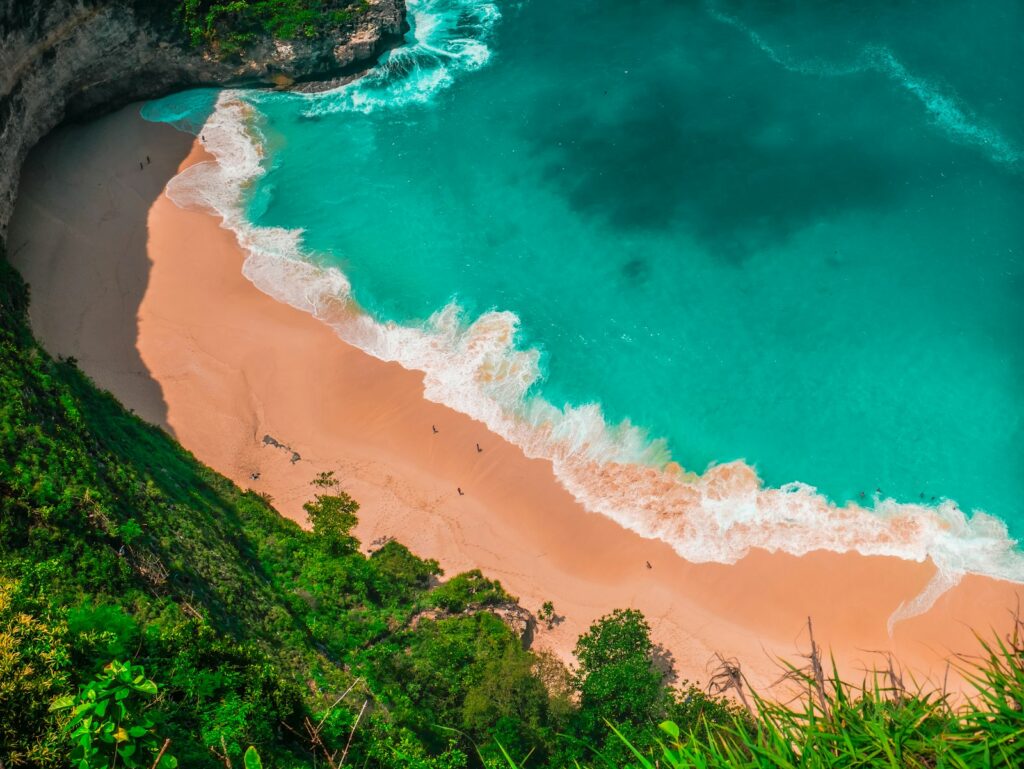
The best time of year for a helicopter ride in Bali is the dry season, roughly April through October, when cloud cover is minimal, visibility stretches to the horizon, and same-day cancellations due to weather are rare. Within any given day, the best window is early morning — typically between 07:00 and 10:00 — when the air is smoothest, the light is warmest, and the afternoon sea-breeze turbulence that builds over the Bukit Peninsula and the volcano slopes has not yet started. Those two facts — dry season, early morning — are the foundation of every smart booking decision. Everything else is detail, and the detail matters quite a bit.
Bali's Two Seasons and What They Mean for Flying
Bali operates on a straightforward tropical two-season calendar. The wet season runs roughly November through March. The dry season covers April through October. That split is well known to anyone who has booked a beach holiday on the island, but its implications for helicopter flights go further than most travel guides explain.
Dry Season (April–October): The Safe Window
During the dry months, daytime skies over South Bali and the Bukit Peninsula are reliably clear. Cumulus build-up over the Kintamani highlands and Mount Batur — elevation around 1,717 metres — tends to stay above the flight altitude for scenic tours, which sit between roughly 300 and 900 metres AGL depending on the route. You can see the Batur caldera and Lake Batur from the air without chasing gaps in cloud. Nusa Penida's white-limestone cliffs at Kelingking, Broken Beach, and Angel's Billabong are fully lit and photographable. Visibility from the south coast toward the Nusa islands and out to Lombok is often 30 kilometres or more.
July and August are peak demand months — Bali's busiest tourism weeks overlap with European and Australian school holidays. The flying weather in this period is excellent, but availability and pricing reflect it. Weekend sunset slots over Uluwatu and Nusa Penida in July and August book out two to four weeks ahead with the main operators. If you want a specific time slot in peak season, treat it like a dinner reservation at a popular restaurant: the earlier you lock it in, the better.
April, May, September, and October are a sweet spot that experienced travellers quietly prefer. Visibility matches the peak months. Crowds are thinner. You can sometimes book a week out rather than three weeks out, and operators are occasionally more flexible on custom routes during these shoulder months. Prices sit at the same published rate — the major Bali helicopter operators do not openly discount for low season — but a private charter arranged direct rather than through an OTA may carry more room for discussion outside peak.
Wet Season (November–March): Possible, Not Ideal
Flights do happen in the wet season. Operators do not shut down from November to March. But there are real tradeoffs that nobody in the brochure business emphasises enough.
Afternoon thunderstorms are frequent across November, December, and January. They build fast. A morning that looked clear can produce a low ceiling by 13:00. Helicopter tours in Bali are conducted under Visual Flight Rules, which means the pilot needs a minimum visibility and cloud separation to proceed legally and safely. When that envelope closes, the flight is scrubbed. Reputable operators will reschedule or refund; the inconvenience is yours.
The volcano routes are hit hardest. Mount Batur and Mount Agung both sit in elevated terrain where cloud bases drop significantly during wet season. A 75-minute tour covering the caldera, Tanah Lot, and the Ubud jungle can find half the route obscured. You might get spectacular cloud-shadow drama over the rice terraces, or you might see very little. The southern coastline routes — South Bali tasters over the Bukit Peninsula, Uluwatu cliff line, GWK, and Pandawa Beach — are more sheltered and can fly when the highlands are socked in, but even here afternoon squalls push cancellations up noticeably versus the dry months.
Christmas and New Year's (late December to early January) are the busiest booking period of the entire year. Demand is at its absolute peak despite the weather uncertainty. If this is your window, book as far ahead as possible — six weeks is not unreasonable — and confirm the operator's cancellation and rebooking policy in writing before you pay a deposit. Some operators hold the deposit against a rescheduled date; others refund in credit only. Know which one you are dealing with.
Best Time of Day: Why the Morning Wins
Most operators publish a daily flying window. The Fly Bali heliport in Ungasan, for example, has published hours of 10:00 to 16:30. Balicopter and other South Bali bases advertise similar windows. Those are their commercial operating hours. Within that window, the 07:00–10:00 bracket — where operators offer it — is consistently better for three separate reasons: air smoothness, photography light, and crowd separation.
Air Smoothness and Turbulence
Turbulence over Bali follows a predictable daily pattern. The land heats up rapidly after sunrise. By mid-morning, thermal convection starts developing over dark surfaces — the lava rock of the Bukit, the black-sand coastal areas near Canggu, the slopes of the Batur and Agung volcanoes. By early afternoon, the sea breeze has strengthened, and the interaction between marine air and heated land produces the bouncy, gusty conditions you feel on the cliff edge at Uluwatu. From inside a helicopter, this translates to moderate turbulence on steep descents and coastal turns.
In the first two to three hours after sunrise, the boundary layer is stable. The air is cool and dense. A Bell 505 or Robinson R66 flying a Nusa Penida circuit will track smoothly over the Kelingking headland and the Manta Point approaches without the lurching turns that are common on the same route at 14:00. For passengers who are first-time fliers or anyone prone to motion sensitivity, early morning is not just a photographic preference — it is the physically calmer option.
Photography and the Quality of Light
The angle and character of morning light over Bali is genuinely different from anything you get mid-afternoon. Low sun from the east rakes across the terraced rice paddies at Jatiluwih (UNESCO-listed, on the longer volcano routes) and the Tegallalang fields near Ubud, creating deep shadow lines between each terrace level. The limestone cliffs at Kelingking and Broken Beach on Nusa Penida face roughly southwest; morning light catches the cliff faces at an angle that mid-afternoon direct overhead sun cannot match. If aerial photography matters to you — and for most people booking a helicopter ride in Bali it does — an 07:00 or 08:00 departure will produce images that look fundamentally different from a noon flight over the same route.
Sunrise flights over Mount Batur are a specific, popular product. The volcano sits at roughly 1,717 metres above sea level. On a clear dry-season morning, the summit emerges above a sea of low valley fog, and the caldera walls catch the first orange light before anything in the lowlands is lit. A 30-minute Batur flight departing shortly after sunrise — offered by some operators on a private or semi-private basis — delivers a quality of view that simply does not exist later in the day when haze and thermal activity fill the caldera with white murk. Booking these early slots requires advance planning: they sell ahead of afternoon tours precisely because the photography community knows this.
The Sunset Slot: Worth the Premium, With Caveats
Sunset is the other high-demand window, and for specific routes it is the right call despite the price premium and the greater turbulence risk.
The Uluwatu cliff line and the GWK statue face west. At golden hour — roughly 17:30 to 18:30 depending on the month — the limestone cliffs of the Bukit Peninsula and the ocean below them turn amber-gold in a way that morning light from the east simply cannot replicate. An Uluwatu sunset flight is the signature product most operators build their marketing around, and it earns that position. The 15-minute Uluwatu Skyline route covering GWK, Melasti Beach, Pandawa, and the Uluwatu Temple cliffs at dusk is genuinely the most photogenic short flight on the island.
The tradeoffs: afternoon turbulence is at its strongest. Sea-breeze influence along the Bukit coastline, especially approaching the Uluwatu cliffs, produces more noticeable bumps than any morning flight. And sunset slots are in demand — book at least 10 to 14 days ahead in shoulder season, and four to six weeks ahead in July, August, or around major holidays.
A practical compromise for passengers who want good light but want smoother air: the 16:00 departure slot, where available. You get late-afternoon golden light without peak turbulence, and competition for slots is a notch lower than the true sunset window.
Seasonal Price Variation: What Actually Changes
Bali helicopter operators publish fixed seat prices and charter prices. Unlike airline fares, these are not publicly dynamic. The official published price for a shared 15-minute Uluwatu scenic flight (around IDR 3,390,000 per seat at Balicopter's published rates, roughly USD 210–225 at current exchange) does not go up in July versus April on any public price list. What changes is availability and the leverage you have on private charter negotiations.
| Period | Weather reliability | Visibility quality | Cancellation risk | Booking lead time (private charter) |
|---|---|---|---|---|
| Apr–May (shoulder dry) | High | Excellent | Low | 1–2 weeks |
| Jun (pre-peak dry) | High | Excellent | Low | 1–2 weeks |
| Jul–Aug (peak dry) | High | Excellent | Very low | 3–6 weeks ahead |
| Sep–Oct (shoulder dry) | High | Excellent–Good | Low | 1–2 weeks |
| Nov (transition) | Moderate | Variable | Moderate | Days to 1 week |
| Dec–Jan (wet / holidays) | Lower | Variable–Poor | High (afternoons) | 4–8 weeks (demand peak) |
| Feb–Mar (wet) | Lower | Variable | Moderate–High | Days to 1 week |
One practical note on pricing: operators in the OTA ecosystem (Tripadvisor, GetYourGuide, Viator, Klook) show retail USD prices that often reflect per-person rates for a shared flight OR a prorated share of a private charter. A “USD 2,277” Nusa Penida flight listed on Tripadvisor is the whole aircraft for 45 minutes — not a per-person seat price. At four passengers that is under USD 600 per head, which is comparable to the per-seat rate on a shared departure. Always confirm whether you are booking a seat or a whole aircraft. The math shifts significantly with group size.
If you want help running the numbers for your group size and dates, plan your trip with our concierge — we will break down the per-seat versus charter math for your specific route and group size, and flag any seasonal promotions that operators are running. WhatsApp planning is available if that is more convenient.
Route-Specific Timing: Not All Flights Are Equal
Timing recommendations are not uniform across all routes. The geography and direction of each circuit means morning versus afternoon light matters differently depending on where you are flying.
South Bali Coastline and Uluwatu (10–15 minutes)
These routes face west. Morning light comes from behind and slightly above as you fly toward Uluwatu from a South Bali departure point. It is adequate but flat. Afternoon and sunset slots are strongly preferred for photography on this route. If you are flying primarily for the experience and the views — not Instagram output — morning is smoother and perfectly satisfying. If the goal is images, push toward 15:30–18:00 and accept the slightly bumpier air.
Nusa Penida Circuit (42–55 minutes)
Kelingking Beach's T-Rex headland faces roughly southwest. Morning light from the east illuminates the cliff faces and the turquoise water below them at an angle that makes the geological structure pop. Afternoon light creates more glare off the ocean surface. For Nusa Penida routes, early to mid-morning — 07:00 to 10:00 — consistently produces better aerial photography results. The water colour at Manta Point and Crystal Bay also reads more vibrantly in morning light than in the high-contrast glare of afternoon sun.
Mount Batur and Volcano Routes (30–75 minutes)
Sunrise or early morning, full stop. The caldera fog effect only exists in the first couple of hours after sunrise. By 10:00 it has burned off. By mid-afternoon, haze from valley heat and agricultural burning in the highlands reduces visibility over the caldera significantly during dry season. These routes should be booked as early in the day as your chosen operator allows. If you are combining Batur with Tanah Lot on a 60-minute-plus circuit, departing at 07:30–08:00 and arriving at Tanah Lot with the mid-morning light still low and warm is the ideal sequence.
Proposal and Wedding Flights
The emotional calculus here is different from pure photography. Most proposal clients choose sunset over Uluwatu because the visual drama matches the occasion — warm light, cliff-edge setting, clear line of sight to the ocean. This is a valid and very effective choice. The practical constraint: sunset proposal flights over Uluwatu in peak season must be booked weeks in advance, and the ground coordination with the operator for a surprise — a private departure, champagne onboard, photographer on the ground at a viewpoint — requires careful pre-arrangement. Operators including Fly Bali and Balicopter offer proposal packages; confirm every logistical detail (photography, flower arrangement, privacy of the flight, and aircraft type) before committing. For a proposal where photography quality is paramount, consider a morning flight over the Nusa Penida cliffs instead — the light is better, the air is calmer, and the route gives you more time in the air for the same spend.
How Far Ahead to Book: A Practical Guide
Bali's helicopter operators are not large fleets. Most operate two to four aircraft. When a single aircraft is in maintenance, that removes a significant portion of the day's available capacity. Combine that with weather-driven rescheduling from a previous day and you get cascading waitlists that fill surprisingly fast in peak periods.
A realistic booking guide by scenario:
- Flexible date, shoulder season (Apr–Jun or Sep–Oct), any route: One week ahead is usually fine. Two weeks gives you choice of slot.
- Specific date, peak season (Jul–Aug), any route: Three to six weeks. Sunset slots on weekends book faster than anything else.
- Private charter with custom route: Add one to two extra weeks regardless of season. Custom route planning and weight-and-balance calculations take coordination.
- Proposal or wedding flight requiring ground logistics: Six to eight weeks minimum. Coordination between the operator, resort helipad (if applicable), and your photographer adds layers that cannot be compressed.
- Christmas or New Year period (Dec 23 – Jan 3): Book as early as eight to ten weeks ahead if you want any meaningful choice of slot or route.
Cancellation policies vary. Most reputable operators will reschedule a weather cancellation or issue a credit. Full cash refund policies are less common and often require cancellation notice well in advance. Read the policy before you pay the deposit. A non-refundable deposit on a wet-season booking is a real risk.
A Note on Haze and Smoke
Seasonal haze is an underreported factor. In some dry-season years — particularly August to October — agricultural burning on Bali and neighbouring islands pushes particulate matter into the lower atmosphere. On haze-heavy days, visibility from altitude that is technically adequate for VFR operations can still produce photographs where the ocean horizon is washed out and distant landmarks look soft. This is not a safety issue but it is an image-quality issue. There is no reliable way to book around it specifically, but if you arrive in Bali and the visibility from sea level looks reduced, it is worth asking the operator about current upper-air conditions before you commit to flying that specific day versus rescheduling by 24–48 hours.
The Practical Checklist Before You Book
Pulling it all together into the decisions you actually need to make:
- Season first: If you have flexibility, target April–June or September–October. Best-to-excellent weather, manageable booking lead time, no premium pricing pressure.
- Route drives time of day: Uluwatu and south coast = afternoon or sunset. Nusa Penida circuit = morning. Volcano (Batur/Kintamani) = early morning, the earlier the better.
- Group size shapes per-person cost: At three or more passengers, run the private charter math. A 42-minute Nusa Penida private charter at IDR 38–46 million divided by four passengers can match or beat the per-seat shared price while giving you a guaranteed departure time and a private cabin.
- Confirm weather and cancellation policy before paying: Ask specifically whether a weather scrub results in a rescheduled date or a cash refund, and what the notice requirement is for a client-initiated cancellation.
- Sunrise Batur early slots need direct operator contact: These are not always in OTA inventories. Call or message the operator directly to ask about pre-commercial-hours availability.
Need help working through the options? Reach out to our planning team and we will walk you through the current lead times, available slots, and per-head costs for your travel window — no spin, just the numbers. WhatsApp works if you prefer.
Frequently Asked Questions
Is a helicopter ride in Bali possible during the wet season?
Yes, flights operate year-round, but the wet season (November through March) brings afternoon thunderstorms, lower cloud bases, and meaningfully higher same-day cancellation rates — especially on volcano routes over Mount Batur. If you fly in the wet season, book morning slots, confirm the operator's rebooking or refund policy before paying, and treat any afternoon departure as a weather gamble. South Bali coastal routes are more sheltered and cancel less often than highland routes in wet conditions.
What is the best month to fly over Nusa Penida by helicopter?
May, June, and September consistently deliver the clearest views of the Kelingking cliff, Broken Beach, and the turquoise water around Manta Point. July and August are equally clear but book out faster. October is reliable too. The Nusa Penida circuit takes 42 to 55 minutes in the air, so you want weather that holds for the full route — dry season is the only practical window for guaranteed visibility on an island-circuit this long.
How far in advance should I book a sunset helicopter flight in Bali?
Two weeks minimum in shoulder season (April–June, September–October). Three to six weeks for July and August. Six weeks or more if you want a sunset slot for a proposal or special occasion in peak season — the sunset window over Uluwatu has very limited seats per day and is consistently the first slot to fill. Booking through an operator directly rather than via OTA sometimes gives access to slots that OTA inventory does not show.
Does time of day affect helicopter safety in Bali?
The safety envelope does not open and close with the time of day — a well-maintained aircraft with a licensed crew is safe throughout the operating window. What changes is the turbulence environment. Afternoon sea-breeze turbulence over the Bukit Peninsula and thermal convection above the volcano slopes are stronger after midday. This makes afternoon flying bumpier and occasionally more stressful for passengers, but it does not make it unsafe under normal dry-season conditions. Severe weather — thunderstorms, low-visibility rain — is what grounds flights, not routine afternoon turbulence. If your operator is flying, the go/no-go decision has already passed the safety threshold.
Are helicopter prices higher in peak season in Bali?
Published per-seat prices at the major operators are generally fixed year-round — there is no publicly advertised seasonal fare increase in the way airlines price dynamically. What changes in peak season (July–August and Christmas–New Year) is availability: popular slots sell out, OTA platforms may show higher retail prices than direct booking, and operators have less incentive to negotiate on private charters. Booking direct and early in peak season is the best way to pay the published rate rather than a scarcity premium. In genuine low season (February–March), you have more leverage on private charter pricing if you are booking direct and the aircraft would otherwise sit.