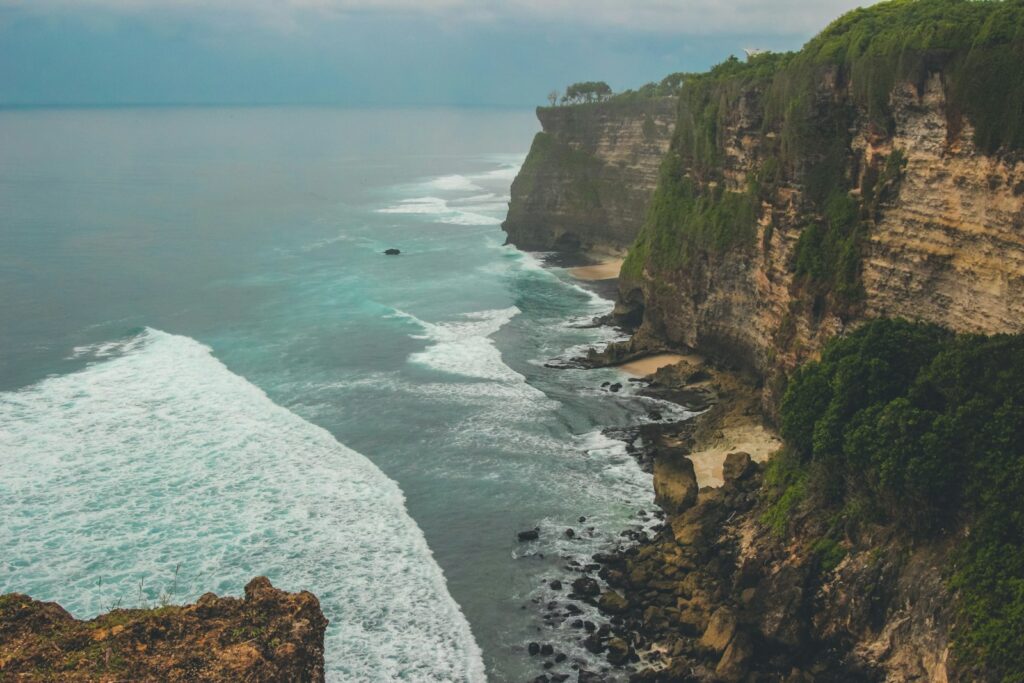
What to expect on a Bali helicopter tour and what to bring: you arrive at the helipad about 30 minutes before departure, complete a weight declaration, listen to a pre-flight safety briefing, then spend anywhere from 10 to 100 airborne minutes watching Bali’s coastlines, temples, and volcano unfold through a bubble canopy — no car-window smear, no crowd, just altitude. This guide walks the full sequence from parking your car to touching back down, so nothing surprises you on the day.
Before You Arrive: Booking Confirmation and Weight Declaration
Most Bali operators — Balicopter, Fly Bali, and others based out of South Bali heliports — ask you to declare your weight at booking, not on arrival. This is not bureaucracy for its own sake. Helicopters are certified to a maximum takeoff weight, and the pilot needs to calculate fuel load, seat balance, and payload before you set foot on the tarmac. Fly Bali, for example, explicitly enforces a total payload cap (passengers plus luggage) and may reduce the number of seats sold on a given flight if the group runs heavy.
Typical per-person soft limits run around 100–120 kg (220–265 lb). If you are near or above that range, contact the operator in advance rather than showing up and hoping. They can usually accommodate heavier passengers by offsetting other seats, adjusting fuel, or switching to a larger aircraft — but only if they know ahead of time. Showing up unannounced and overweight can ground the flight for everyone.
What to confirm before you go:
- Whether the quoted price includes 10–21% tax and any heliport fee — some operators quote “net” inclusive; others do not
- Whether the pick-up transfer (often complimentary from nearby Nusa Dua, Jimbaran, or Uluwatu area hotels) is included or priced separately
- The cancellation and weather-rescheduling policy — reputable operators reschedule or credit, but the terms vary
- What ID is required — a passport or national ID is standard; a boarding pass is not needed
Arrival at the Helipad: What the 30-Minute Window Looks Like
Fly Bali’s heliport sits at Jl. Pantai Melasti No. 8 in Ungasan, about 5.5 nautical miles from Ngurah Rai airport and a short drive from the Bulgari, Ayana, and Four Seasons properties. Raffles Bali has its own dedicated helipad in Jimbaran. Balicopter operates from a private heliport in South Bali. The exact address changes by operator — confirm it when you book, because there is no single central helicopter terminal at DPS.
Thirty minutes early is the standard call time. Use it. Ground staff handle paperwork, actual weigh-in (yes, they may weigh you — politely and discretely, using a standard scale), and seat assignment. If the group is over maximum weight, the pilot adjusts here, not after boarding. You may be asked to leave large bags behind or stow them in a ground-side locker; most operators allow small soft-sided bags or a camera daypack, but hard-shell rollers will not fit.
The Safety Briefing: Short, Specific, and Worth Paying Attention To
Expect a 5–10 minute pre-flight briefing from either the pilot or a ground crewmember. It covers the same core items regardless of which company you fly with:
- Seatbelt and harness
- Four-point or lap belt depending on the aircraft. You will be shown how to fasten and release it. On doors-off flights, a harness replaces the standard belt — more on that below.
- Emergency exits
- On a small helicopter like the Bell 505 or Robinson R66, exits are the doors themselves. The crew will show you how to open your door from the inside in an emergency.
- Life jackets
- Required by Indonesian regulations on flights over water (Nusa Penida routes, coastal runs). You will be shown where they are stored and how to inflate them. Do not inflate inside the aircraft.
- Loose items
- Scarves, hats, sunglasses on a leash — anything that can become airborne. The rotor wash during boarding and disembarking is strong enough to turn an unsecured hat into a projectile. Leave floppy hats at home entirely.
- Photography rules
- On most standard closed-door flights, cameras and phones are welcome. Drones are not permitted mid-flight. Selfie sticks are generally banned. On doors-off charters, all equipment must be secured with a wrist strap or tether.
Listen to this briefing even if you have flown before. Aircraft types differ, briefing details differ, and the pilot’s go/no-go weather call for your specific route can also arrive during this window.
Boarding and the Flight Feel
You board and disembark under the rotor disc — always from the front or sides, never from the rear near the tail rotor. The crew will direct you. Walk in a low, controlled manner, keep your head down, and do not raise anything above shoulder height until you are inside and seated.
Common aircraft types in Bali’s tourism fleet include the Bell 505 Jet Ranger X (one pilot, up to four passengers), the Robinson R66 (one pilot, up to four passengers), and the Airbus H125/AS350 (one pilot, up to five passengers). Exact aircraft vary by operator and availability. The Bell 505 and H125 are turbine-powered, which means a smoother, more reliable power response and less vibration than older piston helicopters.
Once airborne, the sensations that most first-timers do not anticipate:
- Nose-low during forward flight. The helicopter pitches forward to build speed. This is normal and can feel disorienting for about 60 seconds.
- Vibration. There will always be some. A well-maintained turbine machine produces a low-frequency hum rather than a rattle; if it feels rough or uneven, that is worth noting.
- Wind noise. Even on closed-door flights, helicopter cabins are noisier than a car. This is why headsets exist.
- Turns and banking. Scenic routes involve multiple banking turns to give all passengers a clear view of a landmark. These feel steeper than a commercial airline bank but are a normal part of the flight.
Headsets: Your Lifeline to the Pilot and the View
Every passenger gets a noise-canceling headset. Some operators use Bose aviation headsets; others use house-brand equipment. The headset does two things: it cuts cabin noise to a conversational level, and it connects you to the intercom so the pilot can narrate what you are seeing.
Good pilots add real value here. A route over the Bukit Peninsula is more meaningful when someone tells you that the pale limestone shelf below Uluwatu Temple is the same formation that produces the hollow reef break 200 metres offshore. A Nusa Penida circuit over Kelingking Beach lands harder when you know the T-Rex-head cliff is a wave-cut notch formed by centuries of south swell. Ask questions — most pilots enjoy the conversation and know the geography well.
If you are flying with a group split across seats, expect that not all intercom channels work simultaneously on all aircraft. Check before departure if you want to talk to your travel companion mid-flight rather than just the pilot.
What You Will Actually See (Matched to Flight Duration)
This matters, because the brochure language is often vague. Here is what the geography actually allows, based on documented operator itineraries from South Bali departure points:
| Duration | Realistic coverage | Shared seat price range (approx) |
|---|---|---|
| 10–15 min | Bukit Peninsula only: GWK statue, Melasti Beach, Pandawa Beach. The 15-min version adds Uluwatu Temple and Nyang Nyang Beach. Nusa Penida, Ubud, and Batur are not reachable in this window. | ~USD 125–250/person |
| 30–35 min | Extended south coast plus Canggu coastline, or Batur caldera alone (Mason Adventures 30-min route). Not enough time for both. | ~USD 250–500/person |
| 42–55 min | Nusa Penida circuit: Nusa Lembongan, Devil’s Tears, Broken Beach, Kelingking Beach, Manta Point. The 55-min “Four Island” version adds GWK and Melasti on return. | ~USD 550–750/person |
| 60–75 min | Batur + caldera + Lake Batur + Tanah Lot temple + jungle. Some routes include Jatiluwih UNESCO rice terraces. | ~USD 675–900/person (inferred; verify) |
| 85–100 min | Grand island circuit combining south coast, Nusa islands, volcano, and west coast. Balicopter prices the 85-min route from IDR 16,990,000/seat (~USD 1,050–1,130). | ~USD 1,000–1,300/person |
Private full-aircraft charters cover the same distances but cost per helicopter rather than per seat: a 10-minute private flight runs roughly IDR 22–25 million (~USD 1,400–1,600) for the whole aircraft; a 42–55 minute Nusa Penida circuit runs IDR 38–46 million (~USD 2,400–3,000). If you are traveling as three or four people, the math on private versus shared per-seat pricing is worth doing before you book. Need help with that calculation? Plan your trip with our concierge — we will run the numbers for your group size and dates.
What to Bring and Wear
Keep it minimal and secure. Everything you bring goes into the cabin with you, and cabin space in a four-seat turbine helicopter is not generous.
Clothing:
- Closed-toe shoes. Sandals and flip-flops are a safety risk during boarding and are often prohibited by operators.
- Fitted, non-billowing clothing. Loose scarves, sarongs, and wide-brim hats will either be a hazard in rotor wash or banned outright. Leave them at the hotel.
- A light layer if you run cold. Helicopter cabins can be cool at altitude, particularly on longer routes over the Batur caldera (elevation ~1,000 m).
- Sunglasses with a strap or cord. Standard glasses without a leash are a liability.
Camera and electronics:
- A mirrorless or compact camera with a wrist strap. Long telephoto lenses create vibration artifacts in flight photos — a 24–70mm or equivalent range is more practical in the air.
- A fully charged phone. Bring a short cable and a small power bank if your flight is longer than 45 minutes.
- A GoPro or action camera with a secure mount if the operator permits it. Confirm mounting options before departure — most operators will not allow suction mounts on windows without prior approval.
- Polarizing filters help cut glare on coastal and water routes, particularly the Nusa Penida circuit in mid-morning light.
Documents and essentials:
- Your booking confirmation (digital is fine).
- Passport or national ID.
- Motion sickness medication if you are susceptible — take it 30 minutes before departure, not at the helipad.
Leave at home or in the ground car: large bags, hard-shell luggage, umbrellas, full-size tripods, and anything you would not want to lose if it fell out of an open door.
Tipping Norms in Bali Helicopter Tourism
There is no published industry standard and no mandatory service charge for tips. In practice, tipping is genuinely appreciated but not expected in the way it might be on a reef dive or river-rafting trip where the guide physically works throughout.
A reasonable guide if the experience was good: IDR 100,000–200,000 per passenger (roughly USD 6–13) for shorter scenic flights; IDR 200,000–400,000 for longer grand tours or if the pilot provided detailed narration. For private proposals or door-off photography flights where the pilot has coordinated carefully with your photograher or partner on the ground, the upper end is appropriate — or more if the outcome exceeded expectations.
Hand the tip directly to the pilot after you disembark, in cash, in an envelope if you have one. Tipping at check-in or through the operator’s booking system is unusual and may not reach the crew directly.
Weather, Timing, and the Realistic Cancellation Risk
Bali’s dry season runs roughly April to October; wet season is November through March. Scenic helicopter flights operate under Visual Flight Rules, which means minimum visibility and cloud ceiling requirements. Low cloud, heavy rain, or afternoon thunderstorms can ground flights with short notice — this is most common in the wet season but happens year-round, particularly on routes over the Batur caldera where weather builds faster than on the coast.
Most operators run flights daily between approximately 10:00 and 16:30. Early morning slots (10:00–11:30) tend to have calmer air, better light for photography, and lower haze. Sunset-timing slots (roughly 16:00 onward) are popular for the Uluwatu and coastline routes but are the first to go in peak season — book July, August, and the Christmas–New Year period at least one to two weeks ahead.
If your flight is cancelled for weather, a reputable operator will offer a reschedule or full credit. Confirm the cancellation policy in writing before you pay any deposit. If you are on a tight travel schedule with no flexibility, purchasing travel insurance that covers activity cancellation is worth the small premium.
After Landing: The Full Sequence Ends Quickly
The approach and landing take about the same care as takeoff. Stay seated with your belt on until the rotor has slowed and a crew member opens your door and gives the signal to exit. Disembark the same way you boarded — low, controlled, away from the tail. Ground staff will collect headsets and guide you back to the terminal area.
From the moment the skids touch down to being back in the car, you are looking at five to ten minutes. There is no post-flight security check, no baggage reclaim. The entire experience — from walking into the heliport to driving away — is usually under two hours for a one-hour flight, which is one of its genuine practical advantages over a full-day charter boat.
Ready to plan specifics? Our concierge can match you to the right duration and operator for your dates, group size, and what you actually want to see. Reach out here or send us a message on WhatsApp — we will give you honest price ranges and flag any hidden fees before you commit.
Frequently Asked Questions
Do I need to be physically fit to take a Bali helicopter tour?
No special fitness level is required. You sit in a standard aircraft seat for the duration of the flight. If you use a mobility aid, contact the operator in advance — boarding requires stepping up into the aircraft, and some helipad surfaces are uneven. Passengers with serious heart conditions, vertigo, or inner-ear disorders should consult a doctor before booking. Pregnancy: most operators advise against flights during the third trimester; check with your specific operator and your midwife.
Can children fly on a Bali helicopter tour?
Yes, in most cases. Children generally need to occupy a full passenger seat and be old enough to wear a properly fitting seatbelt and headset. Infants who cannot sit independently are usually not permitted. Minimum age policies differ by operator — some set a floor of 2 years, others higher. Confirm before booking and ask whether a child seat is available, since standard helicopter seats are designed for adults.
What happens if a passenger in my group is over the weight limit?
The operator may need to adjust the number of seats available on the flight, switch to a larger aircraft, or schedule the heavier passenger on a separate flight. Some operators apply a weight surcharge above a stated limit (often 100–110 kg) rather than refusing boarding outright. The key is to disclose accurately at booking — a declaration that understates weight by 30 kg creates a safety problem, not just an administrative one.
Is it worth booking the longer flight instead of the short taster?
Almost always yes, if your budget allows. A 10-minute flight is over before you have adjusted to the altitude and orientation. The experience deepens noticeably at 30 minutes and transforms around 45–55 minutes when you reach Nusa Penida or the Batur caldera — those are the views that justify the trip. The per-minute cost is actually lower on longer flights because operators price short hops with a high minimum-block premium. Compare the effective cost-per-minute before deciding: a 10-min flight at IDR 2,290,000 costs roughly IDR 229,000/minute; a 45-min Nusa Penida flight at IDR 8,990,000 costs IDR 200,000/minute.
Can I bring a DSLR or mirrorless camera on a Bali helicopter tour?
Yes, on standard closed-door scenic flights. Keep it on a neck strap or wrist strap, never resting loose on the seat or window ledge. The vibration level on turbine helicopters (Bell 505, H125) is low enough for sharp shots at 1/500s or faster — use shutter priority and keep ISO below 800 for coastal routes in daylight. If you want a doors-off aerial photography session for serious editorial or commercial work, that is a separate product arranged by email or WhatsApp with the operator; expect a minimum 60-minute booking and a notably higher price.